

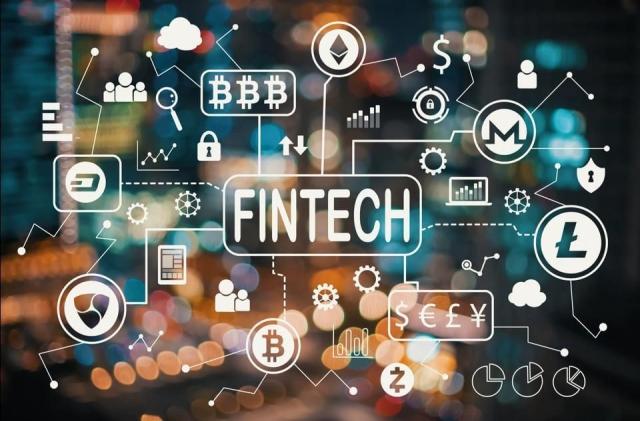
Financial Technology, often known as Fintech, is a word that has been in use for some time. Digital transformation technology has increased the financial sector's ability to meet customers' demands since it is used to handle financial transactions. When you use your credit card to buy products or stocks online or Google Wallet, PayPal, or ApplePay to pay for services, subscriptions, or make investments, you are utilizing Fintech. Thus, Fintech is present in your daily life.
Fintech has been expanding rapidly. According to the research Worldwide FinTech Market Size, Status, and Forecast 2018-2025, the global fintech market will reach $124.3 million by 2025, expanding at a compound annual growth rate of 23.84%. For this reason, fintech firms have access to numerous financing possibilities.
What is a Fintech Startup?
A fintech startup is a firm that uses technology to meet the financial management demands of people. A fintech firm competes with conventional financial service providers because it offers improved experience or more efficient solutions to current challenges.
Since customers are rapidly adopting Fintech, you may create a fintech firm and application. About 96% of purchasers globally have at least one mobile financial application. Also, you must have seen that banks, insurers, and lenders have developed applications to expedite their customers' operations. Likewise, your company can develop and benefit from fintech applications. Therefore, now is the optimal moment to begin your finance company idea.
The comprehensive book will provide in-depth information on the fintech market, how to launch a fintech firm, and why businesses should develop fintech applications.
Six Steps for Launching a Fintech Startup
The finest fintech applications include those digital payments, digital lending, digital banking, digital investing, and consumer finance because they enable users to bank, pay, save, spend, invest, borrow, or earn money. They have found a possible consumer issue and are attempting to resolve it.
Here are the steps for launching a finance firm in 2021.
Recognize the Regulations
Since the fintech and banking sectors are heavily regulated, they must be well-versed in their inner workings. Several regulations control the sector, including anti-money laundering (AML) standards, Payment Card Industry Data Security Standard (PCI DSS), Know Your Customer (KYC), and The General Data Protection Regulation (GDPR).
According to their authority, several other government financial agencies supervise fintech firms. However, the most important regulatory agencies are the Federal Deposit Insurance Corporation (FDIC), the Commodity Futures Trading Commission (CFTC), the Consumer Financial Protection Bureau (CFPB), and the Office of the Comptroller of the Currency (OCC) (OCC).
To build a globally accessible company, you should understand these rules and how they may affect your organization. Remember that these regulations differ from nation to country or, in the United States, from state to state. In the UAE and Mexico, fintech businesses must submit applications for fintech licenses.
Determine Your Niche
- These questions will assist you in selecting a technical specialty for your finance firm.
- What subdomain within the fintech business do you want to enter?
- Who do you intend to reach? Is it a particular population, nation, or location, or is it a worldwide product?
- Do you want to establish the fintech firm locally before expanding globally?
- What is your specialty within the industry?
Among the most prominent financial market niches are:
- Investment management
- Lending
- Mobile banking
- Global transfer of funds
- Advances and loans
- Insuretech
- Blockchain-based technologies
- Crowdfunding
- Financial products
Learn About Your Competitors
After identifying your market niche and region, you must examine your competitors. You are entering a market with current solutions. Thus your product must be unique and fill a particular need inside that niche.
For instance, the financial services sector is a vast specialty, but can you find a specific need? Consider the underbanked demographic and give a solution for them.
Alternatively, you may fail to contribute anything new yet succeed in enhancing the quality of what currently exists. Consider mobile banking; with your new solution, you can make it more efficient and user-friendly than what other firms provide. You may also partner with businesses that offer agricultural equipment, beauty shops, vacation locations, or exercise equipment to facilitate online payments for their consumers.
This is because the fintech sector is expanding, creating several business opportunities. With a relevant concept, you may produce an exceptionally customized and easy solution with your company, even though most of its dominant competitors are large corporations and profitable businesses. This will make you relevant to your target audience and assist you in competing with Microsoft, Apple, PayPal, Pioneer, Stripe, and Coinbase.
Create a Team
The components of Fintech, or Financial Technology, are money and technology. Having an experienced team of technical professionals will allow you to design a specific fintech application. This technological partner should be affordable, relatively inexpensive, and inexpensive.
You may collaborate with an app development business based in a less expensive region yet staffed with excellent technical talent. These offshore financial application developers will collaborate with your in-house team to construct the software or application at an affordable price.
Choose Your Financing Choices
There are several methods to fund your fintech firm. These include crowdfunding, bank loans, venture money, angel investors, and startup competitions.
However, a minimal viable product (MVP) that acts as proof of concept is required. The funding from the MVP is sufficient to create software or an app for the intended market. The majority of these fintech titans began in this manner.
Construct & Improve
Development is the last phase after the previous five have been completed. In contrast to the preceding steps, this is a continuing process that extends into the future.
It entails founding a startup, launching its operations, enhancing its procedures and goods, adopting new technology and trends, and sometimes accepting change.
To prevent the danger of rushing into this oversaturated and highly competitive fintech business, starting modestly and continuously enhancing your product is advisable.
What to avoid when launching a financial technology company
Establishing a financial company is neither rocket science nor a stroll in the park. No one method guarantees success 100 percent of the time. However, most business owners assert that success depends on your decision-making, experience, and competence.
Because the fintech market, like other company sectors, has its dangers, benefits, and drawbacks, you may boost your success by knowing the risks and typical traps that might limit your success.
Avoid the following pitfalls while constructing your finance firm.
Ignoring the Actual Requirements of Your Niche Market
Businesses are founded not on views and hunches but on a genuine pain point or need you to want to fulfill. Hence, before taking the initial step into the financial technology market, you should confirm that the demand you want to address exists and that people are seeking a solution like the one you intend to provide. Otherwise, your company is sure to collapse.
Being Distractible
As stated before, Fintech is a vast technical field with chances and novel concepts. When identifying a niche and entering a market, you must maintain concentration. You must have a plan and see it through to completion.
Employing Average Employees
The success of your business depends on the founding team. However, it is difficult for a startup to find excellent staff. You must invest in and collaborate with the appropriate skills, which might be challenging to locate or costly to employ and maintain.
According to successful Fintech entrepreneurs, companies should engage offshore software developers on a budget to operate alongside their in-house team until the entrepreneur can afford to pay the exorbitant salaries of top financial app developers.
For your financial firm, the offshore workforce, particularly those from more cost-effective areas, will constitute a solid starting team.
Types of Fintech Applications
Creating an app that can help your company grow is complex. It would help if you considered the fintech market segment to target, the cost of developing a fintech application, the technology, and the features to implement. To ensure the success of your fintech application, you must have the proper development strategy in place.
The following types of fintech applications may provide insight into the future trajectory of the fintech sector.
Digital Payments
Digital payments are the most significant segment of the fintech business because they have made it simple, quick, and secure for clients to conduct global financial transactions.
The solutions for digital payments include digital currencies, online payment systems, and e-wallets. PayPal and Payoneer are two of the most popular digital payment services. As you create your financial firm, try to learn from their experiences.
Digital Banking
This option has made it simple to do business from the convenience of your home, workplace, or traveling. You no longer need the assistance of a third party to rapidly complete a financial transaction, as you may do it using digital-only banks and your mobile device connected to the Internet.
Due to intensifying competition, conventional banks have developed a fintech application that clients use to conduct financial activities. You may now get a contactless debit card and mobile app that enable you to authenticate transactions with a PIN, access bitcoin exchange, and make foreign purchases and international money transfers.
Digital Investment
Today, ordinary and institutional investors may invest in various assets in any currency and jurisdiction, regardless of the asset's currency or location. You may invest in the stock exchange, cryptocurrencies, minerals, and precious metals through digital investing platforms. Additionally, you may access relevant data and analytics through the same channels.
Digital Lending
Digital technology has revolutionized how lenders handle loan applications and clients request loans. The market is saturated with basic loan applications. Through entire automated systems, you may apply for and pay for personal loans, vehicle loans, mortgages, and other financial products.
Personal Finance
Using fintech applications, users can now plan their costs and spending. Several free budgeting programs available online can be synchronized with your bank accounts, credit cards, and other digital payment apps.
Significant Technological Developments in Fintech App Design
A good fintech application is a result of aligning business goals with the proper technological stack. It also necessitates having in-depth knowledge of significant technical developments at your fingertips.
As you pursue your fintech development project, you should monitor global innovation trends. They can teach you a lot of things.
Artificial Intelligence
Artificial intelligence identifies and analyzes real-time data, then recommends the best action. As a result, AI has several applications for addressing financial difficulties. For example, it may be used to identify fraudulent activities in Insuretech, regtech, and digital banking, among other industries.
AI can assist you in generating ideas for constructing a competent and dependable financial application.
Blockchain
Blockchain is a highly dependable technology that teaches fintech entrepreneurs how to develop transparent and trustworthy applications. The rationale is that blockchain includes immutable, time-stamped block sequences of data that cannot be altered or removed. This data is kept in a way that ensures its security by being dispersed.
Big Data
In recent years, the use and availability of many technological devices have increased dramatically. This has led to an increase in the quantity of data created and collected. Through data analytics, businesses now have access to a wealth of in-depth information on company growth potential.
You may utilize big data to predict consumer behavior and develop purpose-driven marketing tactics, making your Fintech app the only one your customers will ever need.
Cybersecurity
The digital world is increasingly concerned about data security. Thus, fintech applications should be mindful of storing and managing sensitive client data.
Your team should use a variety of security measures to prevent security breaches and data theft. They should develop a better trustworthy, and secure fintech application.
Microservices
This technique structures an application as a collection of interconnected services. The finance application evolves into a distributed system with decentralized data administration. And now, you can effortlessly include any newly developed solution into your infrastructure. Following microservice, artificial intelligence, and blockchain developments can decrease the cost of constructing your finance application.
Why You Should Launch Your Fintech Startup Immediately
1. A High Adoption Rate
Almost every smartphone has at least one fintech application, and conventional financial institutions such as lenders, banks, and insurance are rapidly adopting Fintech.
Additionally, businesses are looking to Fintech to automate and simplify their operations.
A Diverse Range of Developmental Opportunities
Current market circumstances provide several chances; thus, it is wise to develop a fintech application immediately. It is anticipated that mobile applications will generate revenues of at least $935 billion by 2023. This number might be more significant if comparable startups develop their financial applications before then.
Integration into Organizational Infrastructure
Shortly, significant industries will be required to develop fintech applications and perhaps benefit from them.
As the world shifts toward mobile applications, launching a financial firm at this time is an incredible opportunity that you should not pass up.
4. An Abundance of Available Technologies
The financial technology business is replete with cutting-edge technological developments and innovations, such as the Internet of Things, Machine Learning, Artificial Intelligence, and Robotics.
One of these technologies may be used to develop an efficient and appropriate fintech solution. Financial technology is exciting and lucrative because the technology is also a solution in and of itself.
The Top Fintech Startups and Software
Before, during, and after Covid-19, many fintech startups and apps performed successfully. When conventional banks and lenders shuttered their doors, and the epidemic almost stopped the global economy, many of them benefitted.
Here are some of 2021's most notable financial businesses and apps.
I. Coinbase Specialization: Digital Currency Exchange
This leading digital currency exchange website has made it simple for consumers to purchase and sell digital currencies such as Ethereum, Bitcoin, and Lightcoin online.
As previously said, bitcoin technology teaches the finance sector transparency. It has been working without a hitch in 102 nations. Registering with Coinbase is simple and quick, and the software is secure.
II. Stripe Niche: Online Payments
Stripe is a $36 billion financial technology company. It is a prominent online payment gateway used by several ecommerce firms, ranging from startups to multinational IT corporations. This finance behemoth focuses on digital businesses and provides essential development tools.
This Internet payments infrastructure is booming due to its straightforward integration, which makes it simple to install.
III. Mint Specialization: Personal Finance Management
Mint offers various services, including budgeting, cost monitoring, account management, and bill paying. This personal finance software allows you to monitor your costs without installing several programs.
The company's success may be attributed to its comprehensive content marketing, intensive market research, and careful planning. It has invested in developing articles, infographics, and material, and its marketing slogan is "bank-level security."
IV. Robinhood's Specialty: Investing and Trading
Robinhood is a commission-free software for trading stocks and cryptocurrencies. The fintech application makes investing simple and cost-free. The corporation generates money via premium accounts, cash on hand, and stock holdings.
The company's famous investing app targets millennials and its features and marketing have been geared to match the requirements and ideals of the younger generation.
In addition, the highly tailored zero-commission software offers a streamlined user experience, which has helped the Robinhood app surpass its rivals.
V. Oscar Health Specialty: Insurance (Insuretech)
In recent years, insuretech has gotten more attention, and Oscar Health has taken advantage of the potential in electronic healthcare. Oscar Health's app provides a customer-centric, economic, and straightforward experience.
It empowers consumers with a devoted staff that assists them in selecting the most suitable insurance solutions and resolving problems.
This software allows users to schedule appointments, get test results and virtual health suggestions, and upload and preserve their medical information.
Other prominent fintech companies include Adyen, Addepar, Avant, Lending Club, Braintree, Commonbond, Wealthfront, and Xero.
Parting Shot
The fintech software development is flourishing as an increasing number of organizations build apps. Therefore, you should be a competitor and not a spectator.
Now that you understand how to launch a finance firm, you should seize the finest chance in this market and join this revolution. Your business could be one of the best global fintech startup applications in niches such as insuretech, mobile banking, mobile trading and investments, online payments and international fund transfers, personal finance management, crowdfunding, cryptocurrency, and blockchain-based solutions, among others.
While this is not one of the most straightforward markets to target, you can establish an excellent finance firm and app that can survive the Covid-19 epidemic and beyond with the help of this approach and a strong team with tech skills and excellent domain expertise.